Table of Content
I guess this nibbles swapping weirdness is caused by the way the low-level hardware BCH engine is actually working. Swap another time the nibbles of the computed BCH code. Swap the nibbles of each of the 2080 first bytes of the page.
Someone here apparently found a workaround but I've decided I quite like hearing rain all night. While the heavy lifting is all done in the cloud, there is no noticeable lag between asking Google Home Mini to do something and receiving a response. The experience is a lot like talking to a person since you use natural language to interact with the device and receive responses in natural language as well. Lifewire EV EVs have been around a long time but are quickly gaining speed in the automotive industry.
Google Nest Mini
” to get answers to the most common privacy and security questions. Its in-store longevity could have been due to Google making too many at launch, and you will undoubtedly find a handful on store shelves if you still really want one. That said, the Home Mini does not appear on Best Buy or Target online stores today.

Repeatedly desoldering and soldering back the NAND Flash would have been annoying and could have caused damage to to the PCB. It's the most direct way of achieving code execution on the platform. My goal will be to modify the NAND flash content until I can execute my own code. The Google Home Mini is protected by some kind of secure boot. Bootloader and Kernel are cryptographically verified. To conclude, at first sight, the hardware looks rather annoying to work with and doesn't appear to be very talkative.
Loa thông minh Google nest mini – Google Home mini thế hệ 2
The Google Home app is designed to show you the status of your home and keep you up to date with what you may have missed. Check in on your home anytime and see a recap of recent events. You can also get a notification if something important happens while you’re away. Turn on the lights, adjust the thermostat, or get an alert when there’s a person or package at your front door. Google Home on WearOS will be available as a preview as we continue to add controls and improvements.

Learn how the long-coming and inevitable shift to electric impacts you. This system can be used to easily dump and alter the NAND Flash of the Google Home Mini, essentially making it In-System Programmable. It shouldn't actually have been a real surprise to me, as it was clearly stated in the DEFCON slides I linked to at the very beginning of the article. I sadly realized the Google Home Mini was not booting anymore. I quickly understood how naive I was by reading the init.rc script from the Kernel initramfs.
Speaker and microphones
Uploading these bitstreams to the FPGA using the SPI Slave Mode programming procedure. Generating one of the four bitstreams detailed above. The bitstream is uploaded to the FPGA by following the protocol described in the iCE40 Programming and Configuration Document. Using these two modes required a special configuration to be burnt to the EEPROM of the FT2232H. The procedure I used to program the correct configuration to the EEPROM is the following.

So the Nest Mini is essentially just a slightly more expensive, and slightly better, version of the Google Home Mini. For instance, keeping track of the Google Home Mini firmware releases becomes relatively easy. Further, attempting to run arbitrary code on the device from the NAND Flash becomes possible.
What is the Google Home Mini?
The first thing to note is that the way the data is written to a NAND Flash is somewhat special. Each page contains data and a special section called OOB, the out-of-bound section. This feature can somehow work a little bit at the very beginning of the Google Home boot sequence though. A this early point, the clock of the NAND Flash peripheral is reduced to a couple of hundred of kHz. More importantly, the Google Home Mini can still boot without problems despite all the heavy surgery it received. Receive the NAND Flash data and compare it to the content of filename.
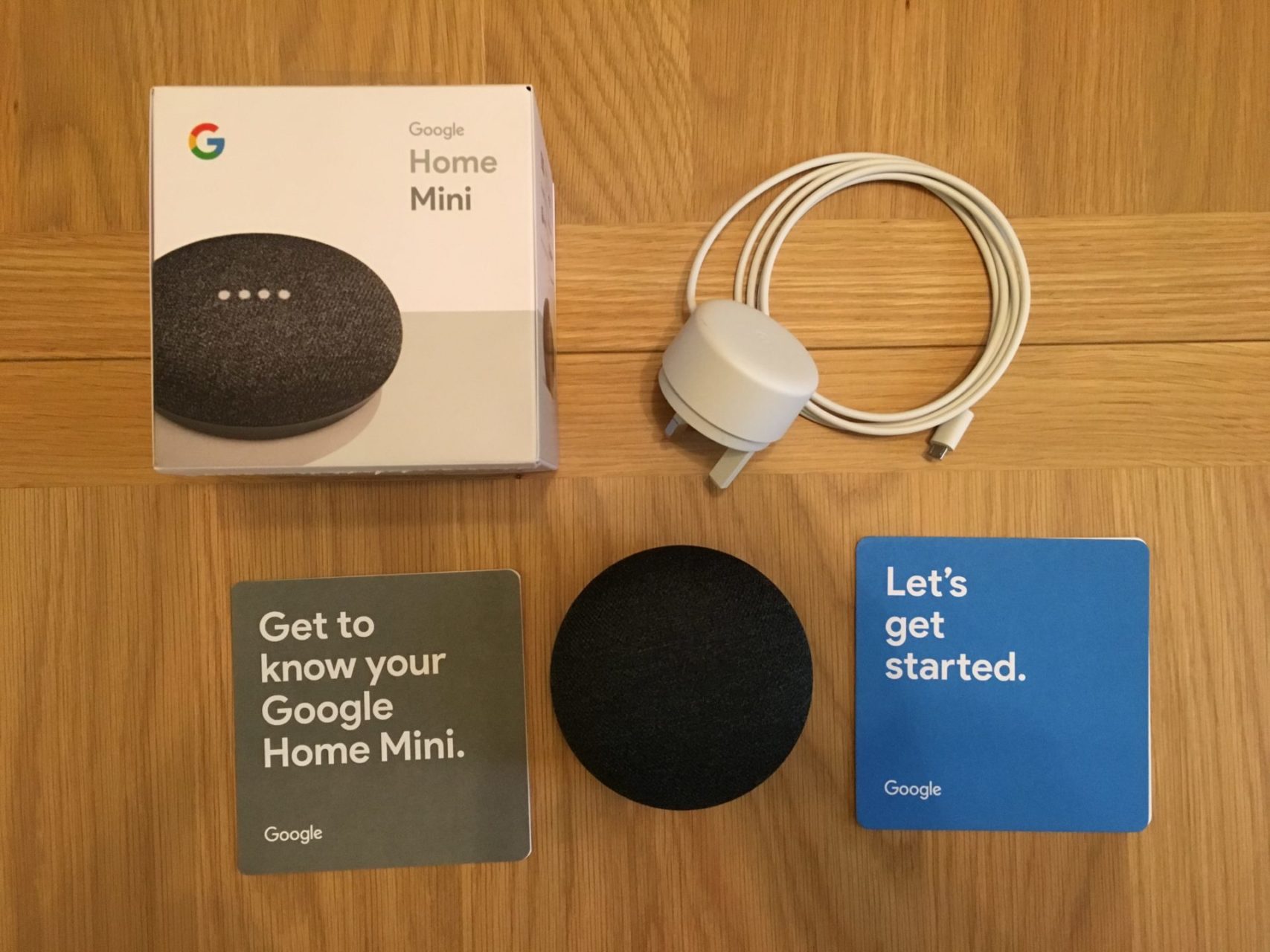
The Google Home Mini is ideal for two sets of people. If you've never used a smart speaker, but you want to try it out without paying for an expensive Google Home or Google Home Max, then the Home Mini is a great affordable option. The Google Home Mini is also an excellent addition to any home that already has one or more Google Home devices. Apart from being an interesting challenge, running arbitrary code on the Google Home could be interesting for several reasons. Indeed, because the processor of the Google Home Mini comes without any public datasheet, arbitrary code execution can lead to a way better understanding of the system.
Using strings and grep against the firmware dump can quickly reveal interesting bits of information. It was now time to actually have a look at the content of the NAND Flash dump. Playing with the bchlib Python library somewhat confirmed this hypothesis. The length of the ECC data we measured thanks to the graphical visualization could match a BCH-48 algorithm. A glance at the bootloader/berlin_tools/bootloader/nand_ctrl/mv_nand.c file is enough to understand the ECC is calculated by the hardware of the main SoC itself.

It's not absolutely necessary to read this section to understand the rest of the article. The Interposer board, soldered on the Google Home Mini PCB, ready to be used. These evenly spaced and sized solder balls will help greatly when it comes to solder the Interposer to the Google Home PCB. To help with the soldering process, I ordered a stencil at the same time with the Interposer PCB. The holes of the stencil are matching the NAND Flash footprint.
It's reducing the likelihood I can still discover something to exploit in it to bypass the secure boot on a Google Home Mini. This push button is not accessible without cracking the case open. Pushing it at boot time will force the bootloader to boot from the USB port of the device. However, only signed code can theoretically be executed. The Home tab gives you shortcuts for the things you do most, like playing music or dimming the lights when you want to start a movie.
This is done with a soldering iron equipped with a flat tip, a small piece of desoldering braid and a lot of soldering flux. The Main Board has been partially assembled by their SMT assembly service. I only had to hand solder the USB connector, interposer connector and FPGA. All these boards have been manufactured for cheap by JLCPCB. This board is obviously pretty simple, just a bunch of wires. What has been a challenge was to install it on the Google Home Mini.
Set up your Nest Wifi and Google Wifi in minutes using the Google Home app. Run speed tests, set up a guest network, and easily share your Wi-Fi password with family and friends. Use parental controls like Wi-Fi pause to manage online time for the kids. Automatically prioritize video conferencing and gaming traffic on all devices, or decide which devices to prioritize for all traffic types. Get more insights on your network, whether it’s a notification when a new device joins your network or detailed insights for troubleshooting a poor internet connection. The Google Home app will walk you through the steps to set up your Google Nest or Home speaker or display.
Another transformation was applied to the data before or after BCH encoding. However, this information alone isn't enough to compute the ECC in the exact same way with the hardware. Each page is very likely using an ECC placed in the OOB area. Further, for two identical "data" pages, the corresponding OOB area will be the same as well. Given this information, a graphical representation of the binary dumped data can quickly help checking whether the OOB section is likely to be used for storing ECC or not.


No comments:
Post a Comment